Mountain Huts
Yamagoya culture is central to Japanese trekking. These are not hotels. They are functional shelters at altitude that make multi-day routes possible without carrying camping gear. Know what to expect.
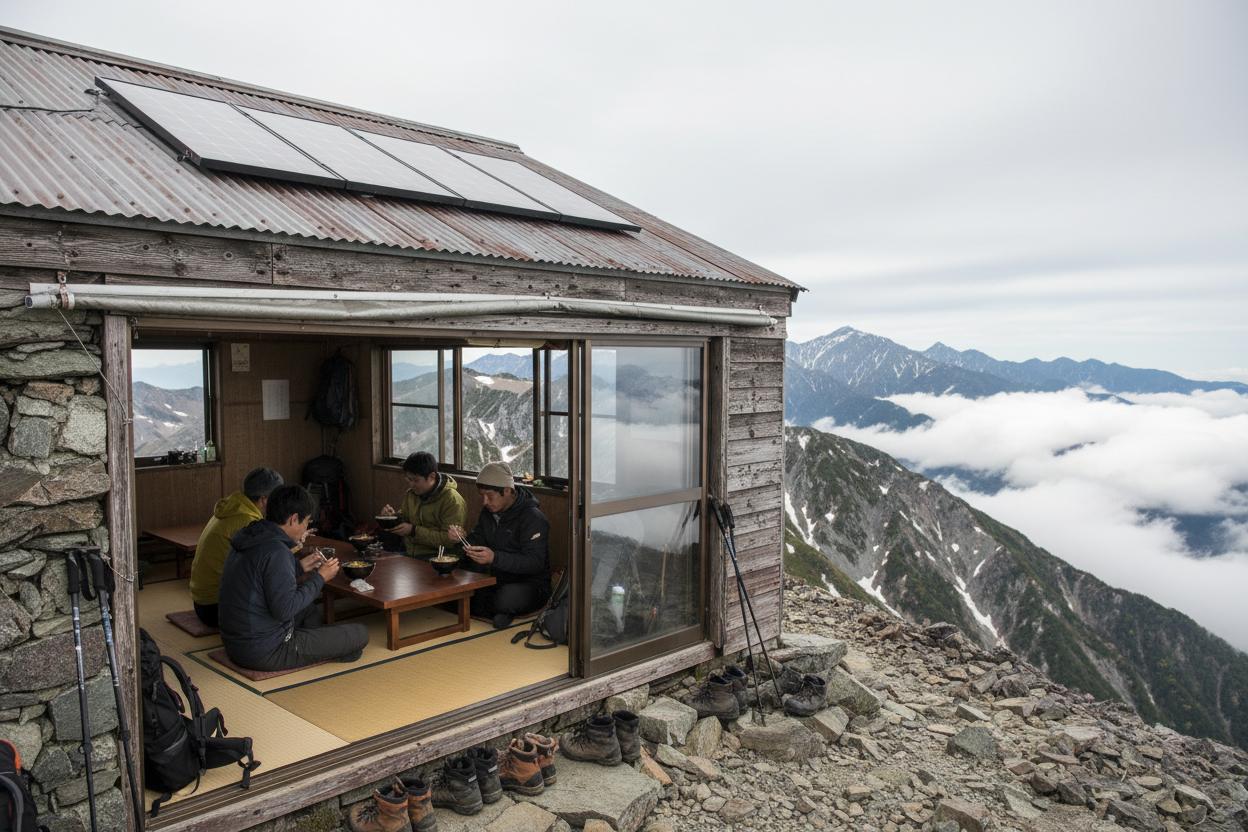
Hotakadake Sanso
The largest hut in the Northern Alps. Built into the ridge at 2,500 m. The solar panels charge slowly — priority is hut operations, not your phone. Sleeping is communal on tatami platforms. You'll hear snoring. Bring earplugs.
What's here
- Solar panels (limited charging)
- Ramen ¥1,200
- Communal dining
- Emergency radio
- Blankets (no sheets)
What's not
- No shower
- No wifi
- No privacy
- No running water (tank system)
Food
Ramen ¥1,200. Curry rice ¥1,000. Beer ¥800 (if they have it). Bring cash — no cards, no ATMs.
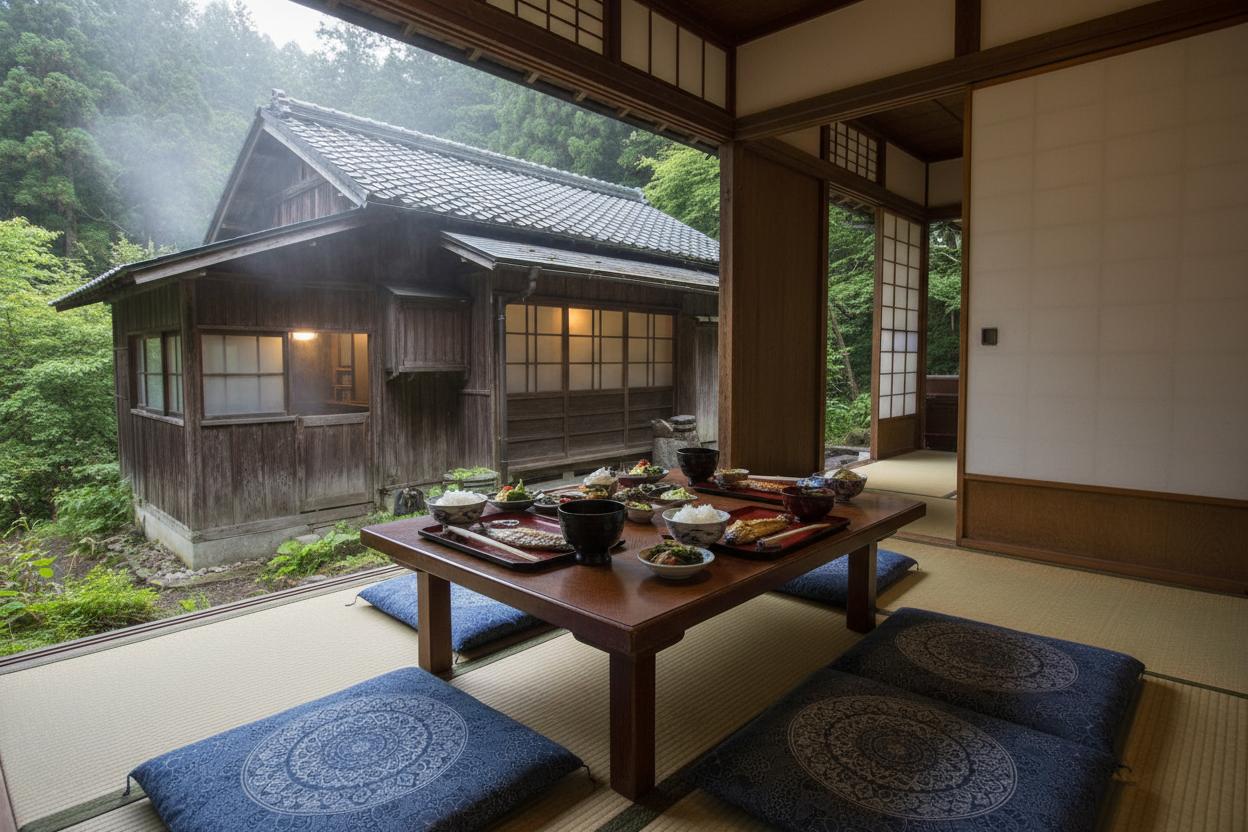
Kumano Kodo Lodge
This is not a mountain hut — it's a family-run inn along the pilgrimage trail. Wooden building, 8 guest maximum. The owner catches river fish for dinner. The bath is heated with wood fire.
What's here
- Private tatami rooms
- Hot bath (ofuro)
- Home-cooked dinner
- Family-run since 1980s
What's not
- Not a mountain hut
- No English TV
- No restaurant (meals with stay only)
Food
Dinner is local: river fish, mountain vegetables, rice from their field. Breakfast is miso soup, grilled fish, pickles.
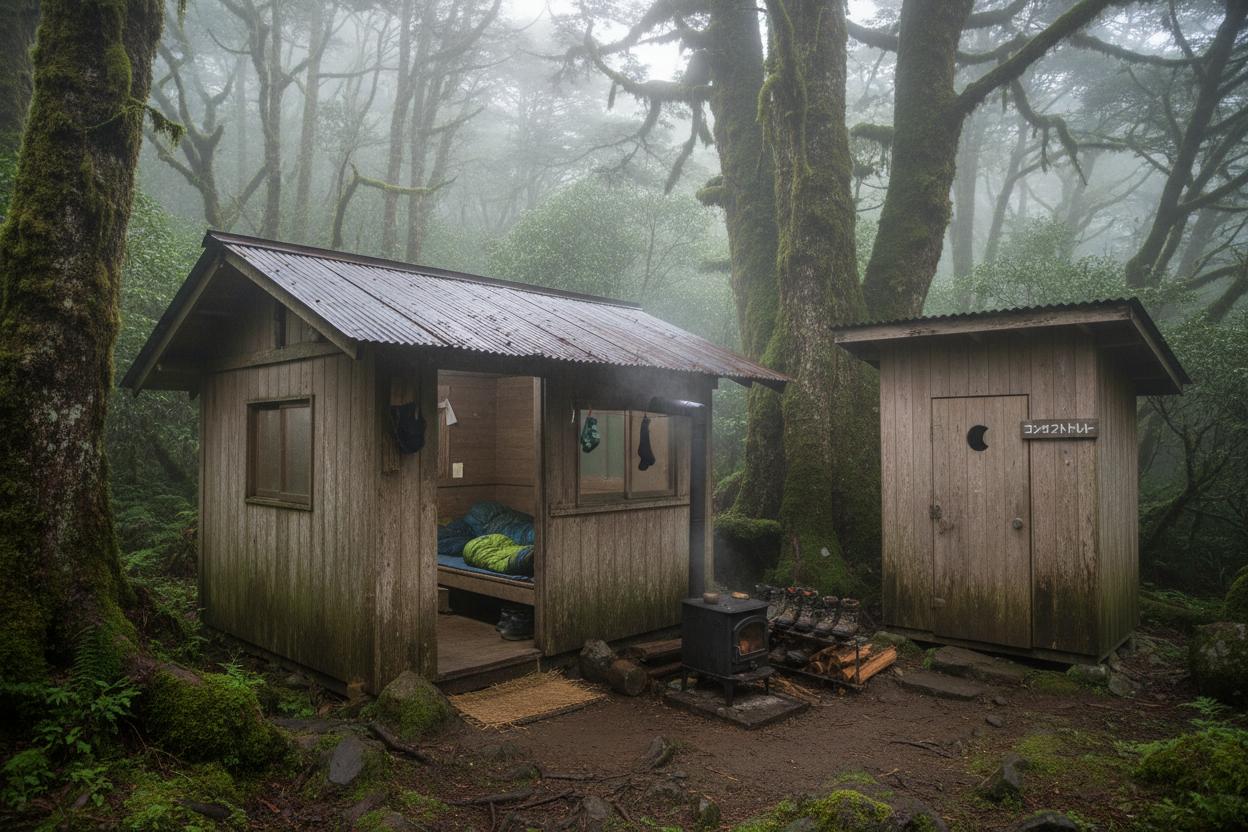
Yakushima Hut
It rains 300 days a year here. The hut smells of wood smoke and wet boots. Sleeping bags are provided because yours would be soaked. The compost toilet works surprisingly well.
What's here
- Compost toilet
- Rainwater collection
- Dry sleeping bags for rent
- Wood stove
What's not
- No shower (wipes only)
- No electricity (headlamps)
- No phone signal
- No shops (pack everything)
Food
Bring all your food. Hut sells only instant noodles and hot water. Pack calorie-dense snacks — you burn more in the cold rain.
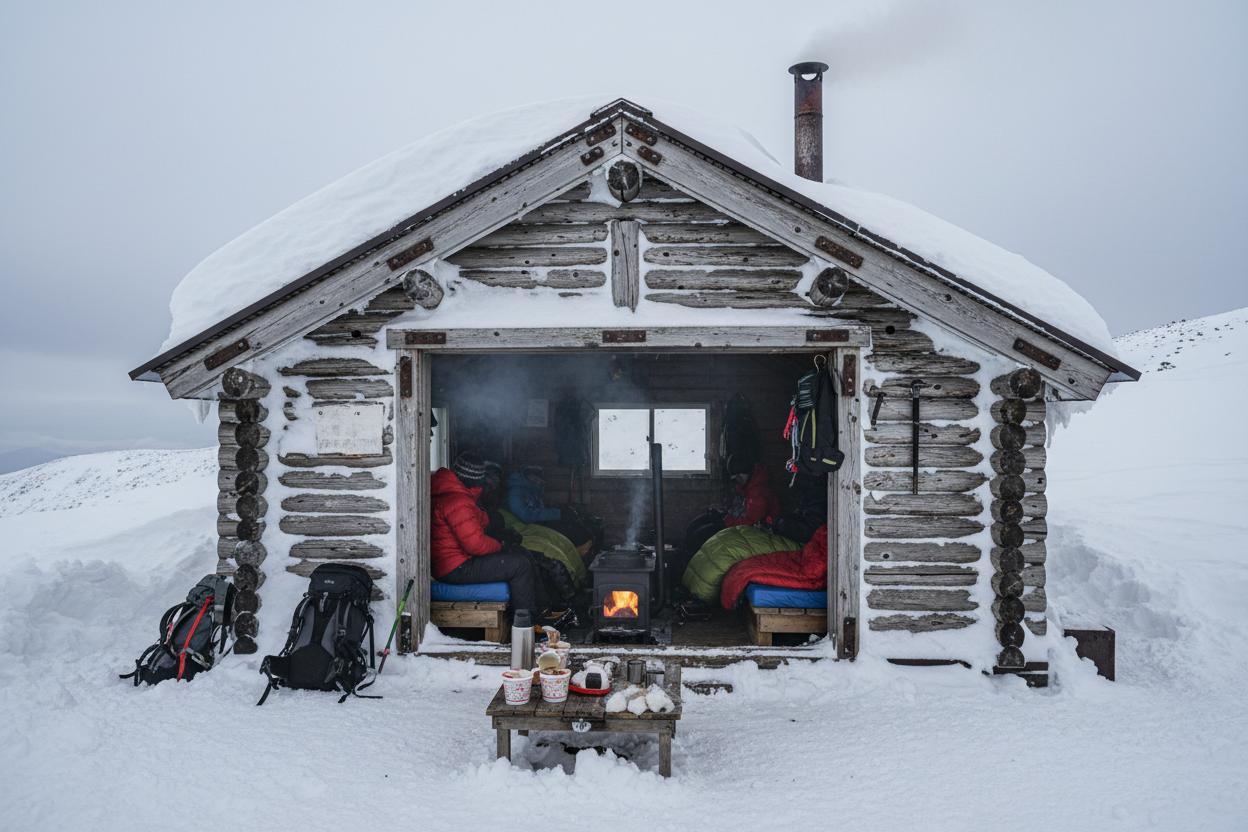
Fuji 8th Station Hut
Winter-ready hut at 3,000 m. The stove burns constantly and dries boots overnight. Walls are thin — wind hits at 80 km/h. Sunrise is at 4:30, so sleep early.
What's here
- Wood stove heating
- Sunrise view at 4:30
- Hot water for drinks
- Blankets
What's not
- No shower
- No wifi
- Thin walls (wind noise)
- No running water
Food
Cup ramen ¥400, rice balls ¥300. Hot water free with stay. Bring extra snacks for summit day.
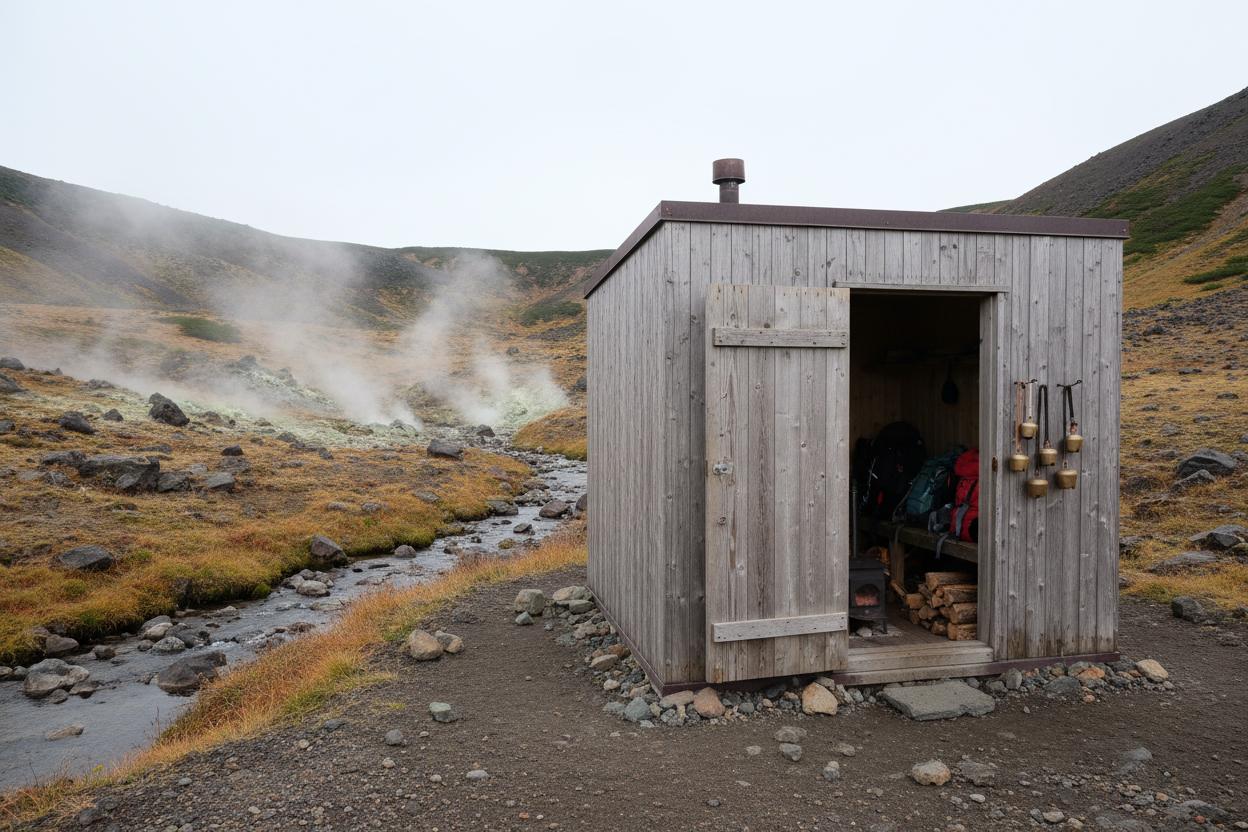
Daisetsuzan Emergency Shelter
Minimalism by necessity. Water comes from the stream outside. Bear bells hang on the door — ring when entering so you don't surprise a visitor. The most remote hut we use.
What's here
- Water from stream (filter it)
- Bear bell on door
- Emergency radio
- Basic stove
What's not
- No shower
- No wifi
- No phone signal
- No bedding (bring liner)
- No food for sale
Food
No food sold. Pack all meals for Day 1 and 2. The guide carries backup rations.
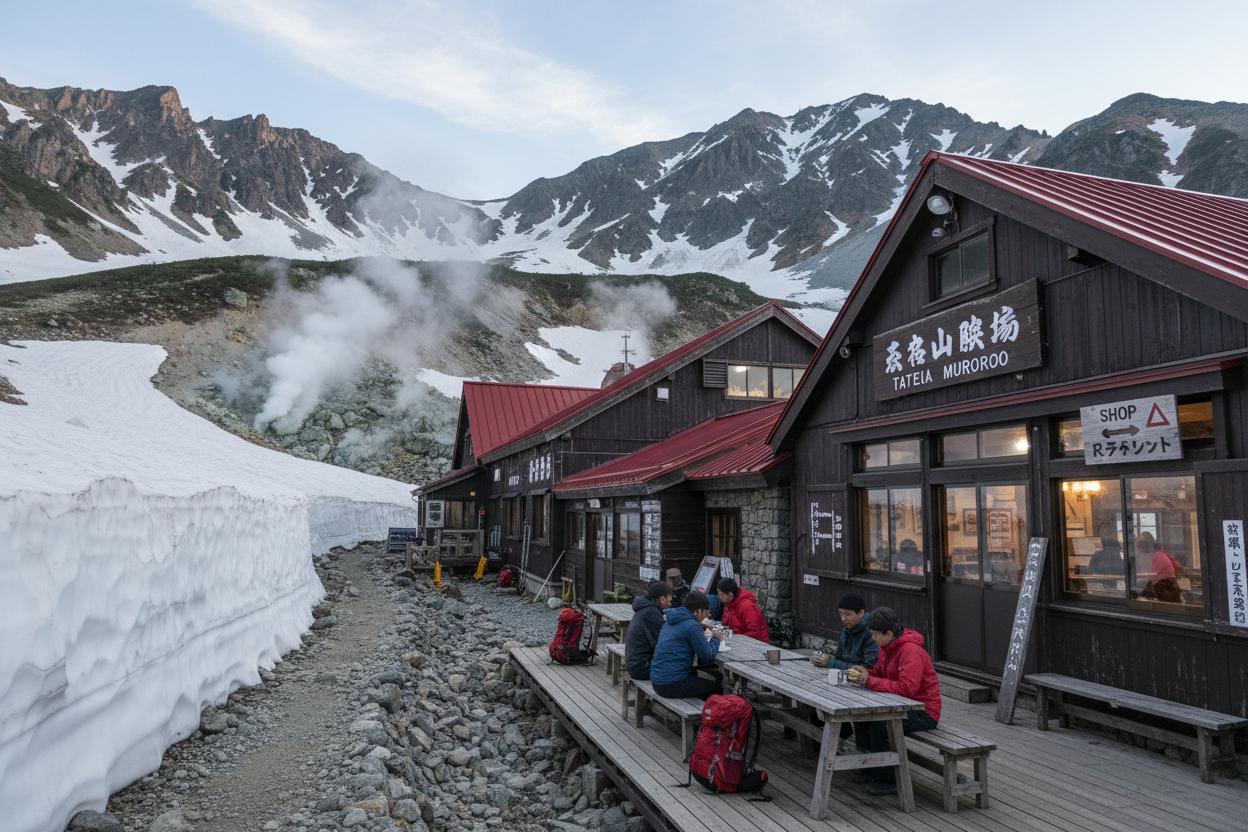
Tateyama Murodo
The most "luxurious" mountain hut in Japan. Hot spring 5 minutes away. A shop sells beer and chocolate. Still communal sleeping, but the bath makes up for it.
What's here
- Onsen 5-minute walk
- Shop (snacks, drinks)
- Restaurant (curry, ramen)
- Phone charging (coin-op)
- Large communal bath
What's not
- No private rooms
- No wifi (too high)
- No ATM (bring cash)
Food
Restaurant serves curry ¥1,000, ramen ¥800. Shop has snacks, beer ¥600, soft drinks. Cash only.